What hooked Mats on clay? “The material, the throwing, the thing everyone talks about. It’s so intriguingly malleable, it’s very sensual and a bit tricky. Just that you can make form out of basically earth.”
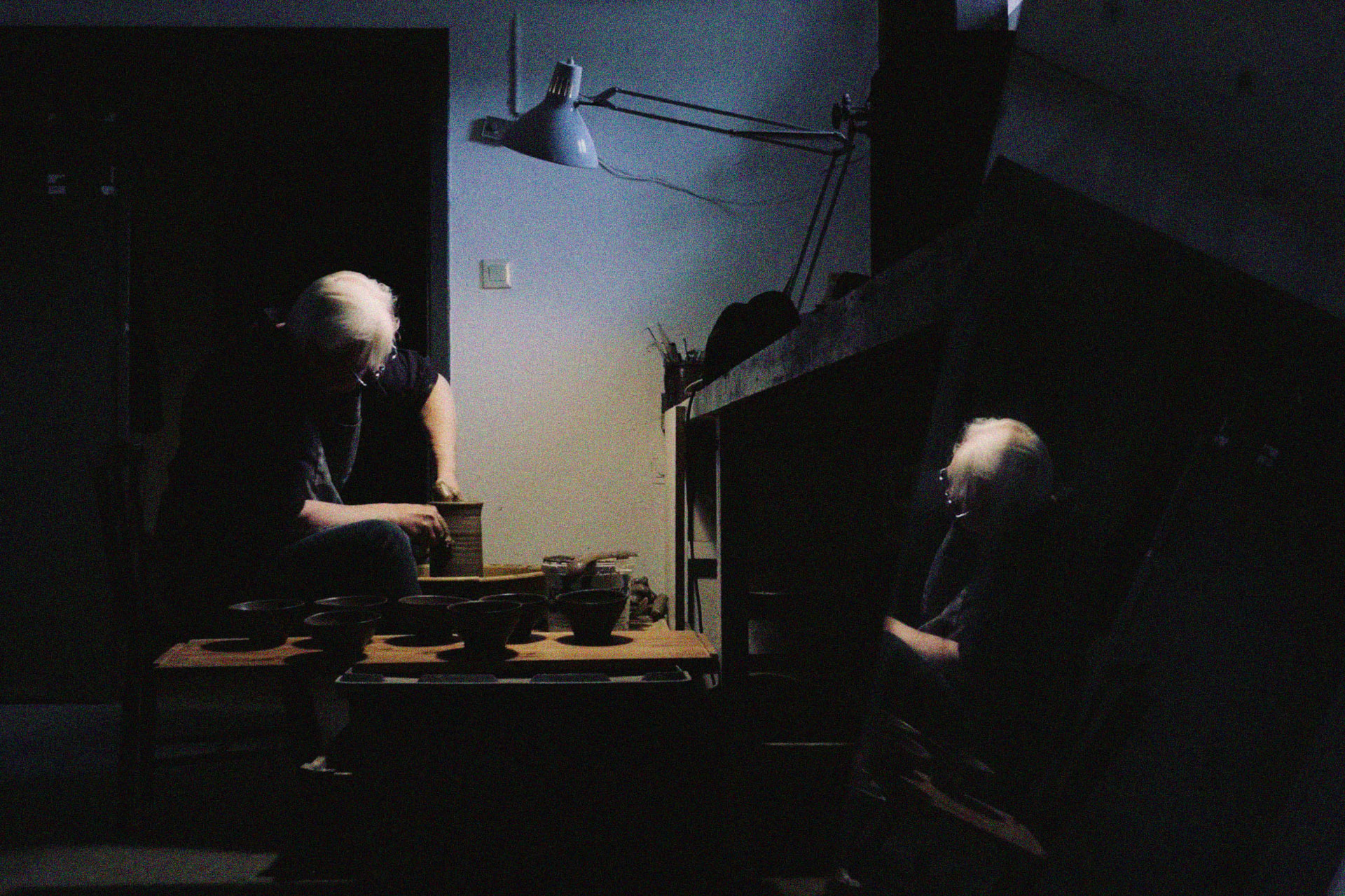
For him, the wheel itself has always been part of the craft. He started on kick-wheels which he says was meditative. “You got into a rhythm. It’s so much more wonderful to throw on a kick-wheel. It doesn’t make noise, and when the speed drops you adapt your grip too.” At school, he and his classmates built stick-wheels from old car parts from a scrapyard. “Hamada-styled wheels. I can miss those wheels.”
He grew up surrounded by craft. “My parents were both craftspeople. I understood that crafts isn't something you learn all at once. I had to ask and then try it myself.” He was over thirty when he saw the connection. “My mother was a baker, kneading and shaping. My father was a smith, with the heat and the hard material. And I picked something in between.”
Why clay? “It doesn’t have to become anything. You can just knead it again. You can tear a piece of clay apart and smack it back together, and it sticks. In theory you can make something lasting, or you can choose not to let it last.” And what captivates you the most? “It’s malleable, it’s addictive and it’s sensual. Malleability beats everything else.”
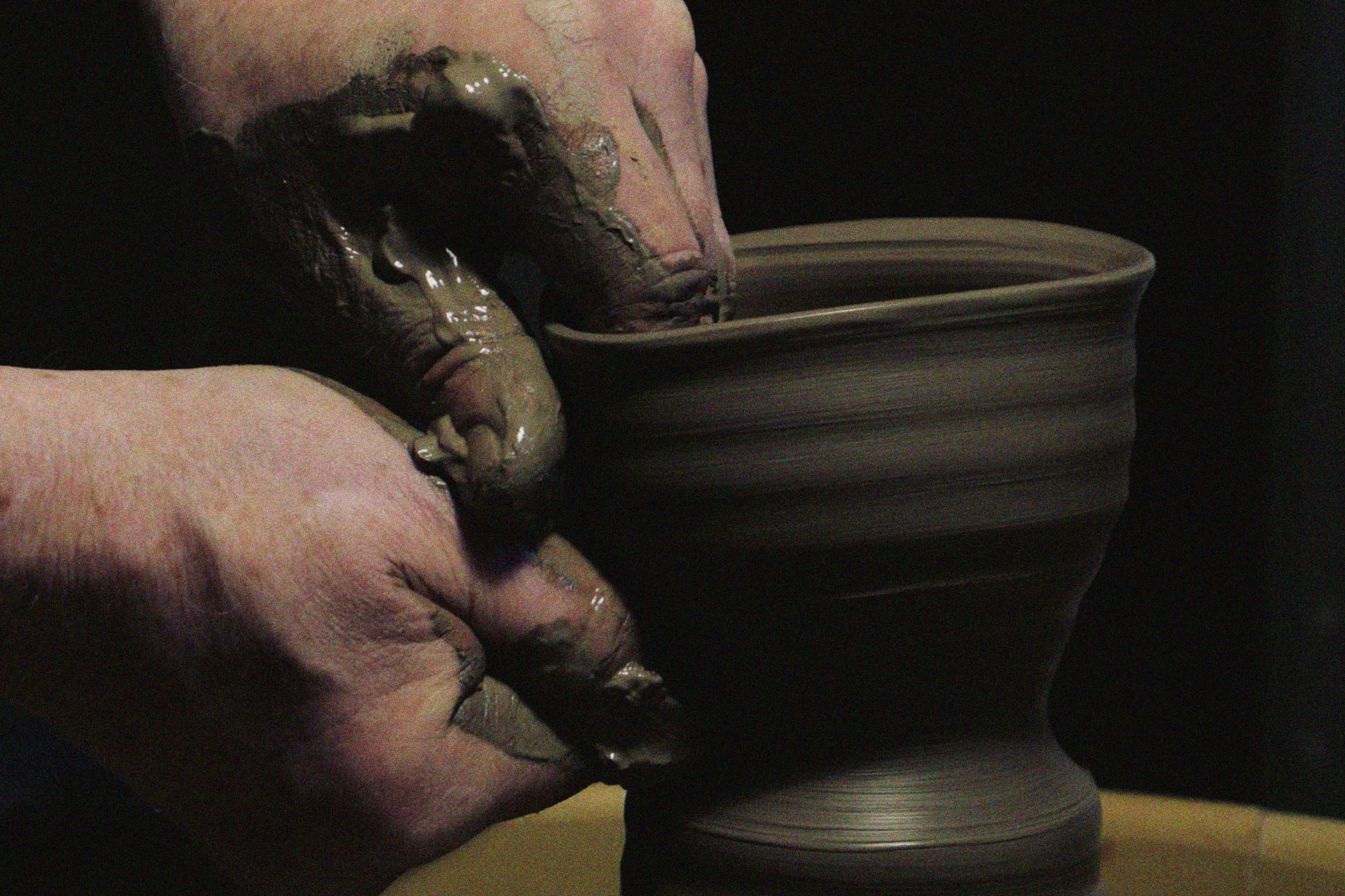
What hooked Mats on clay? “The material, the throwing, the thing everyone talks about. It’s so intriguingly malleable, it’s very sensual and a bit tricky. Just that you can make form out of basically earth.”
For him, the wheel itself has always been part of the craft. He started on kick-wheels which he says was meditative. “You got into a rhythm. It’s so much more wonderful to throw on a kick-wheel. It doesn’t make noise, and when the speed drops you adapt your grip too.” At school, he and his classmates built stick-wheels from old car parts from a scrapyard. “Hamada-styled wheels. I can miss those wheels.”
He grew up surrounded by craft. “My parents were both craftspeople. I understood that crafts isn't something you learn all at once. I had to ask and then try it myself.” He was over thirty when he saw the connection. “My mother was a baker, kneading and shaping. My father was a smith, with the heat and the hard material. And I picked something in between.”
Why clay? “It doesn’t have to become anything. You can just knead it again. You can tear a piece of clay apart and smack it back together, and it sticks. In theory you can make something lasting, or you can choose not to let it last.” And what captivates you the most? “It’s malleable, it’s addictive and it’s sensual. Malleability beats everything else.”
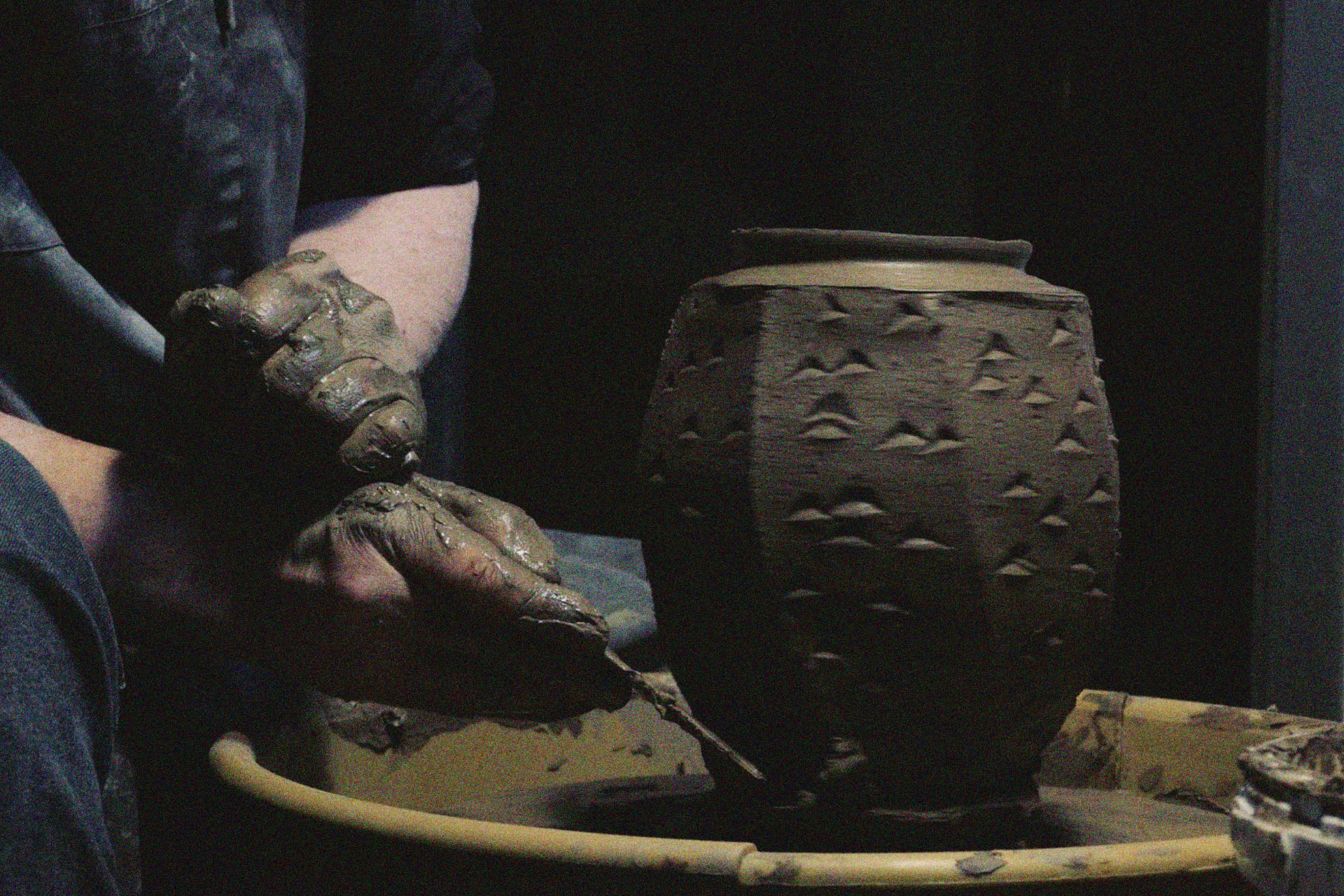
“For me the process is very important, that I lose myself a bit in what I’m doing. It can be very nice at times.”
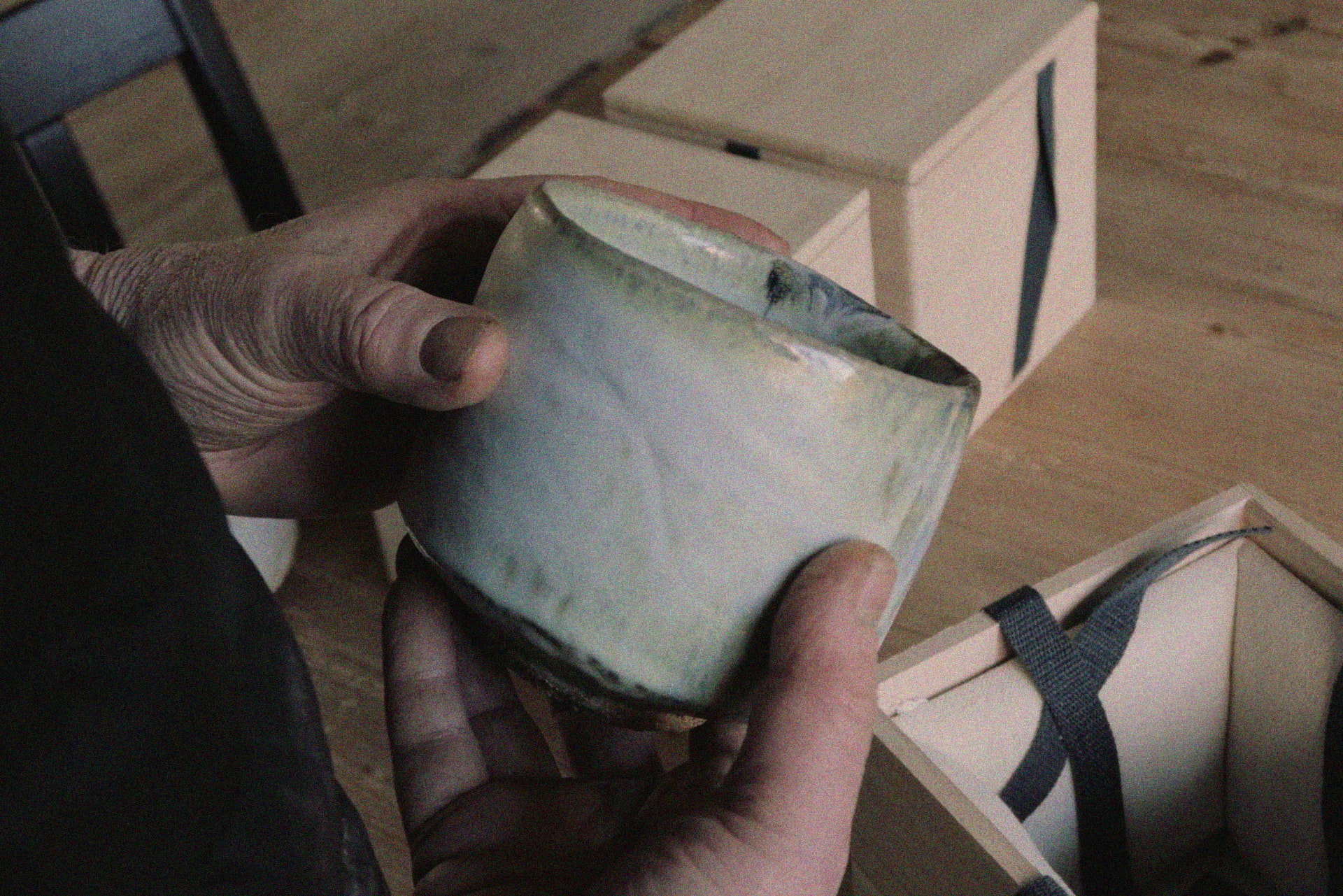
How does it feel in your hands? “Very, very different. I think you train the sensitivity in your hands. I can throw with sagger clay, which is the coarsest. If you take it easy, you can manage without rubber gloves, even if the grog is sharp and raw.”
Today he is back in the room where he began. “The ceramics was there when I started in 1973 at the folk high school, and now I have that room as my workshop.” What does it smell like? “Dust. Sometimes a bit of sewage. It’s dusty and very ugly and a bit cold. But I like it so much.” He prefers to be left alone. “I hardly let anyone in.” And he makes what he finds fun. “Other people may not. It doesn’t matter. It’s easy as a retiree to disregard the market and what others think.” He says with a smile.
He has stripped his process down. “I trim as little as possible and I used to be so careful with glazing. Now I slop and pour. It turns out as it turns out. It’s more fun.” The stage he likes least is the dry one. “What I appreciate in the soft clay is gone.” I say clay dies a little as it dries and gets fired. “It’s actually true that it becomes a different material when it’s fired. Then it’s ceramics.”
When the kiln opens and everything’s broken? “I’m so used to that. I’ve learned not to make any judgments. Maybe only after a week do I look at it. Mostly it isn’t what I expected or planned. What drives me is probably just seeing what it turns into. And for me the process is very important, that I lose myself a bit in what I’m doing. It can be very nice at times.”
Does clay make demands? “No, I’m the one who makes demands on myself. But it’s not certain that I’m the one who fully decides.”
What has it taught him? “Clay has maybe been the common denominator. But really, it is all the people who have worked with clay who have taught me so much. I’ve learnt that everyone out in the world thinks differently, works differently and sees things through their own lens. There is no single right or wrong way”.
Three words for someone who’s never touched clay? “The first is just to try it. My standard answer to most things. I don’t think I can come up with anything more. I would never push it on anyone.”