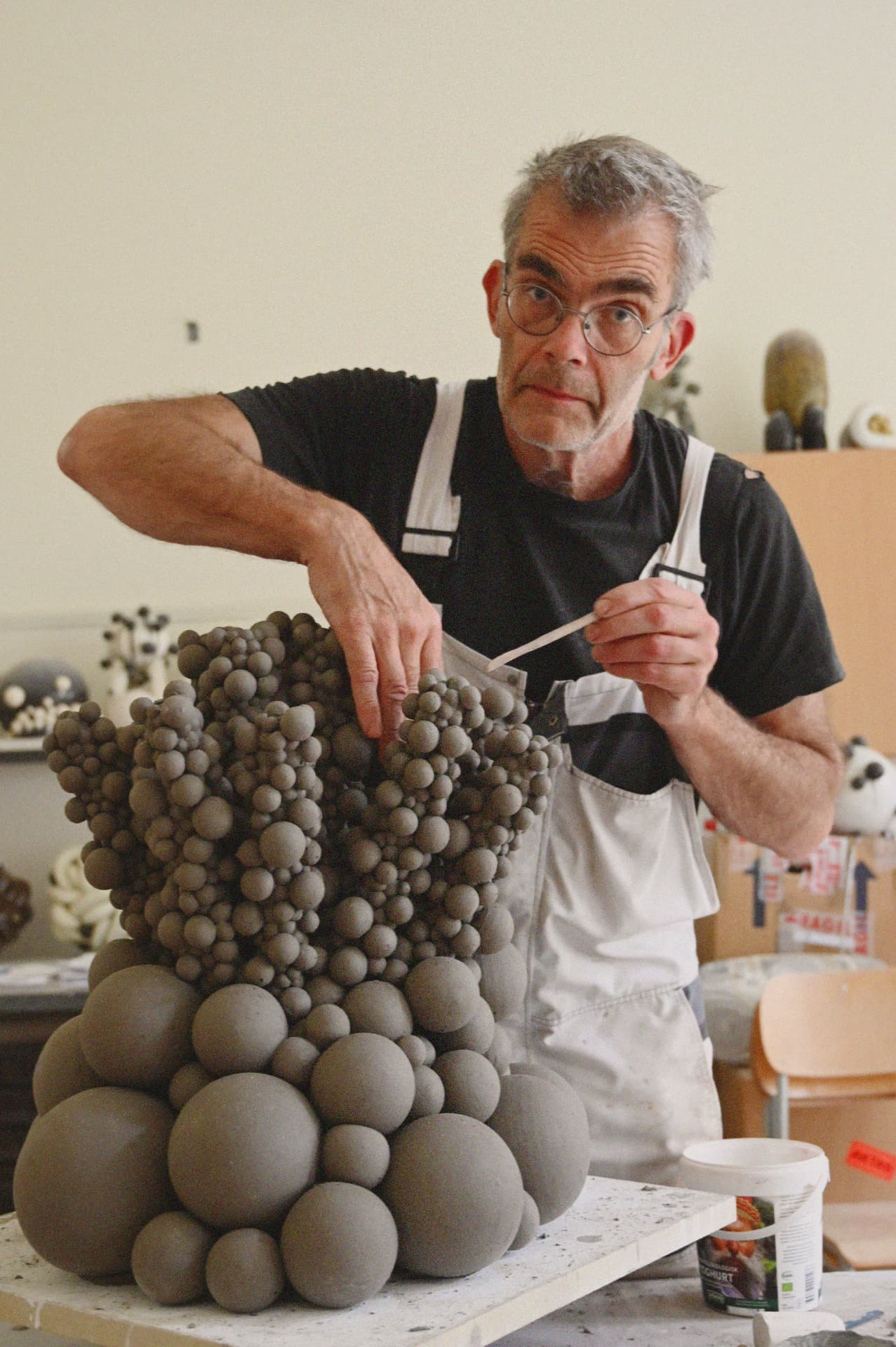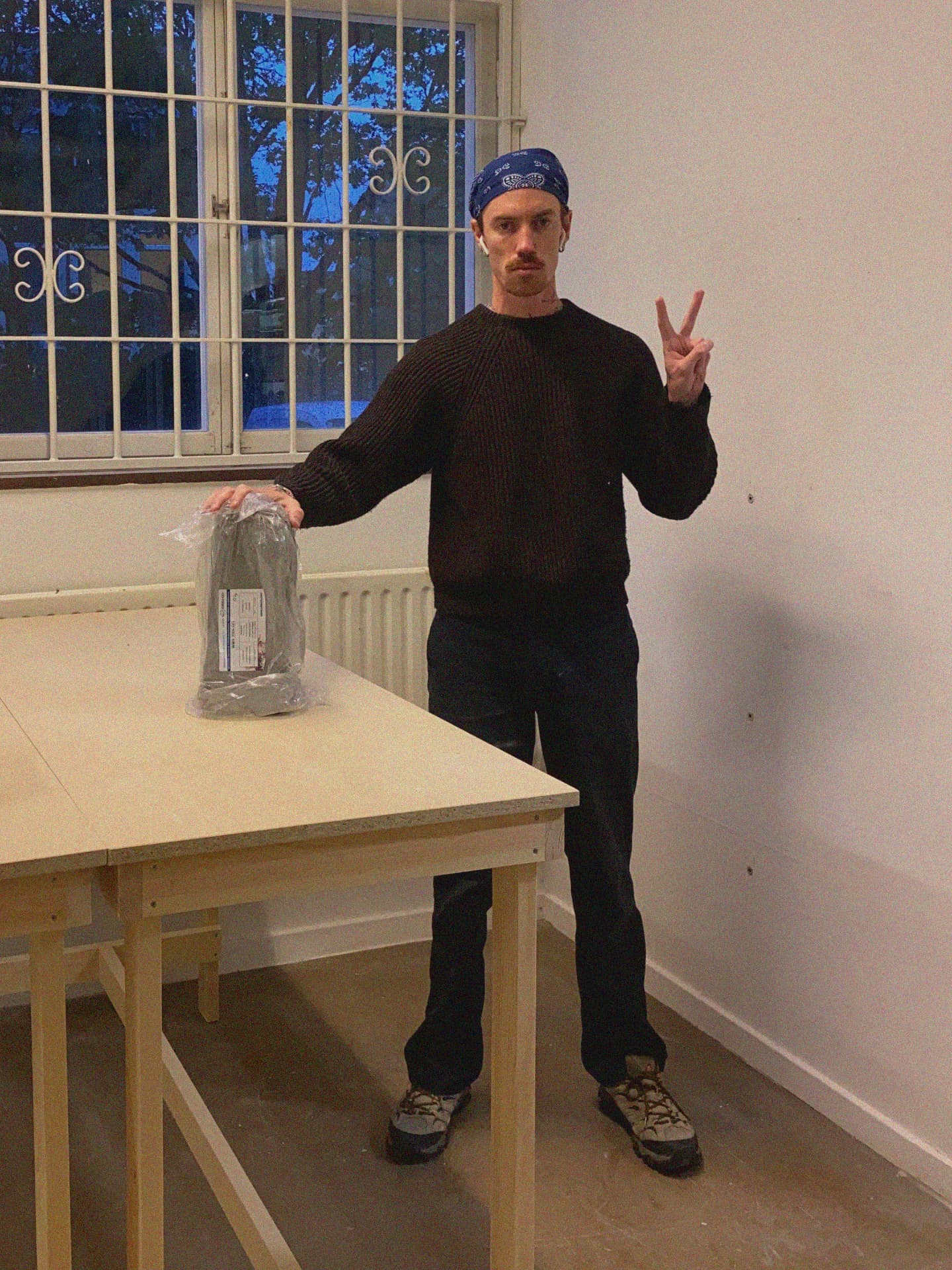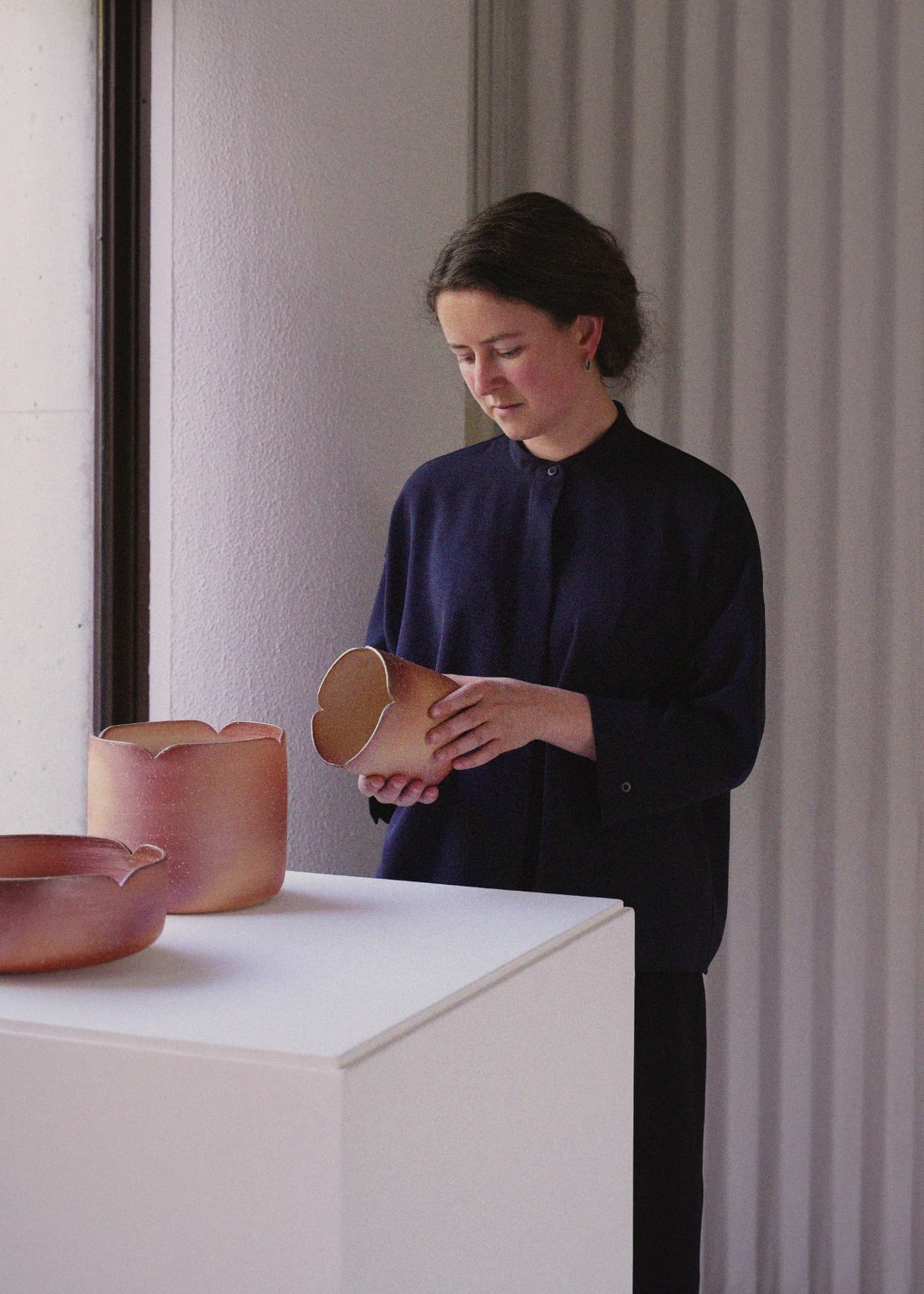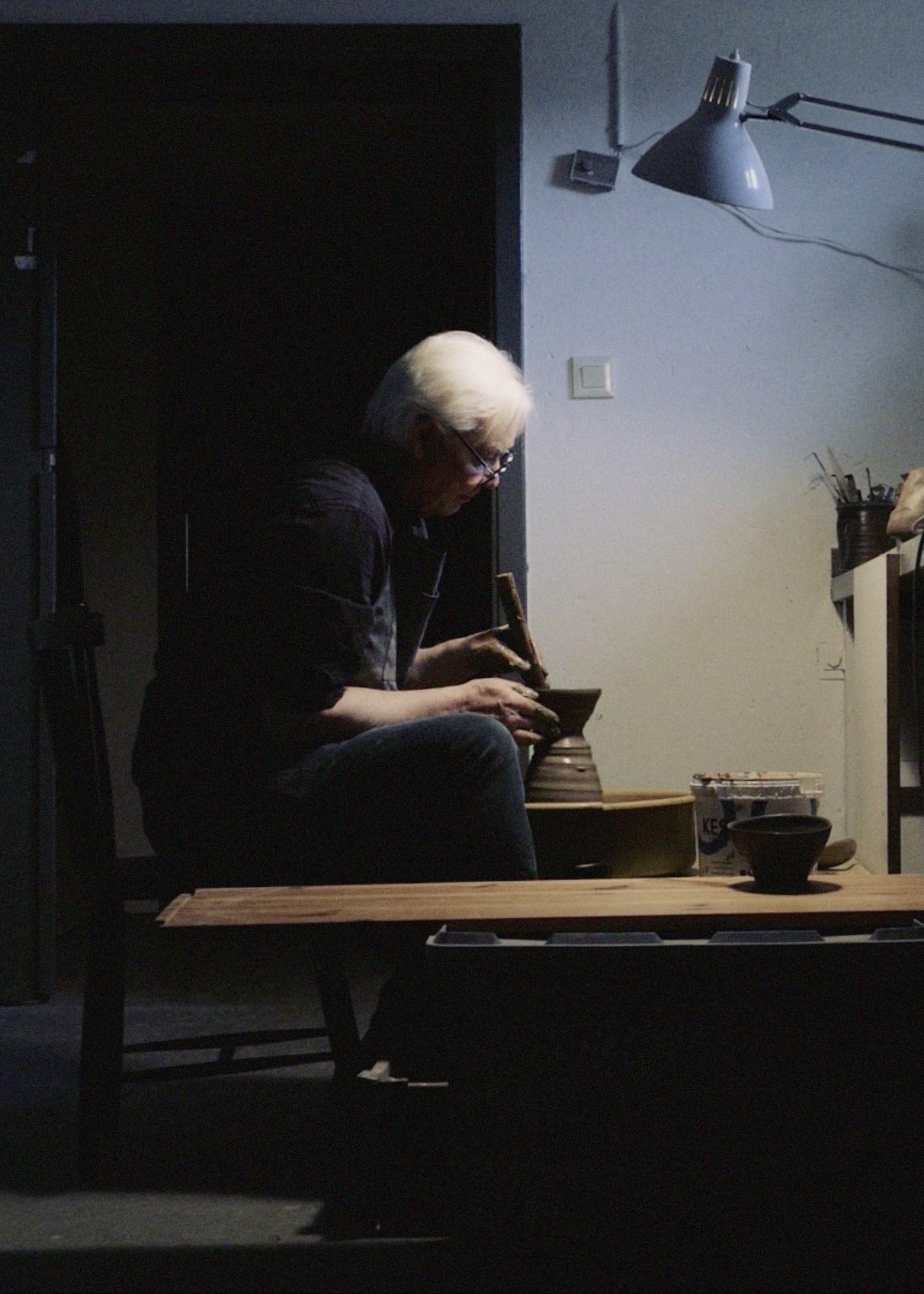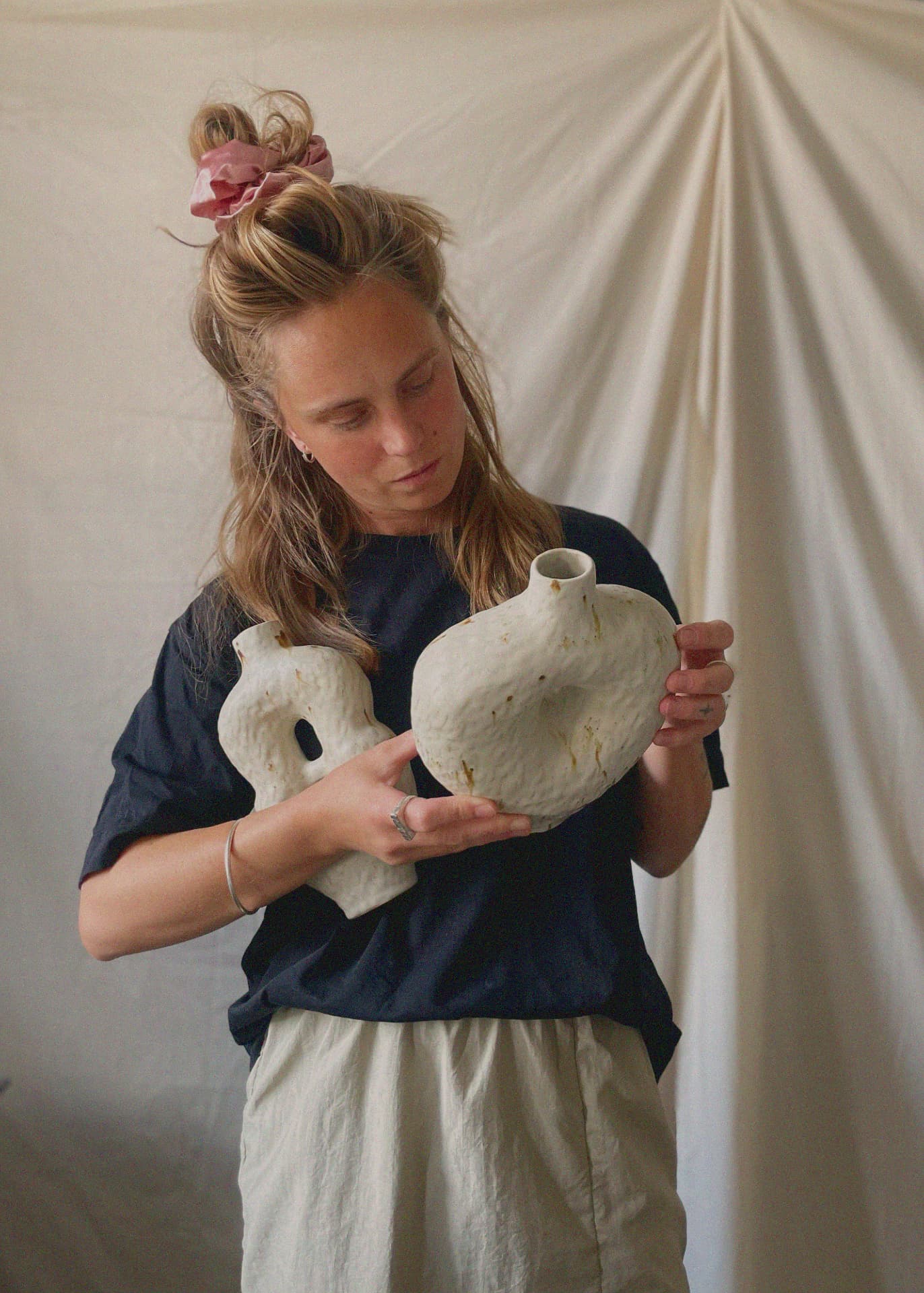
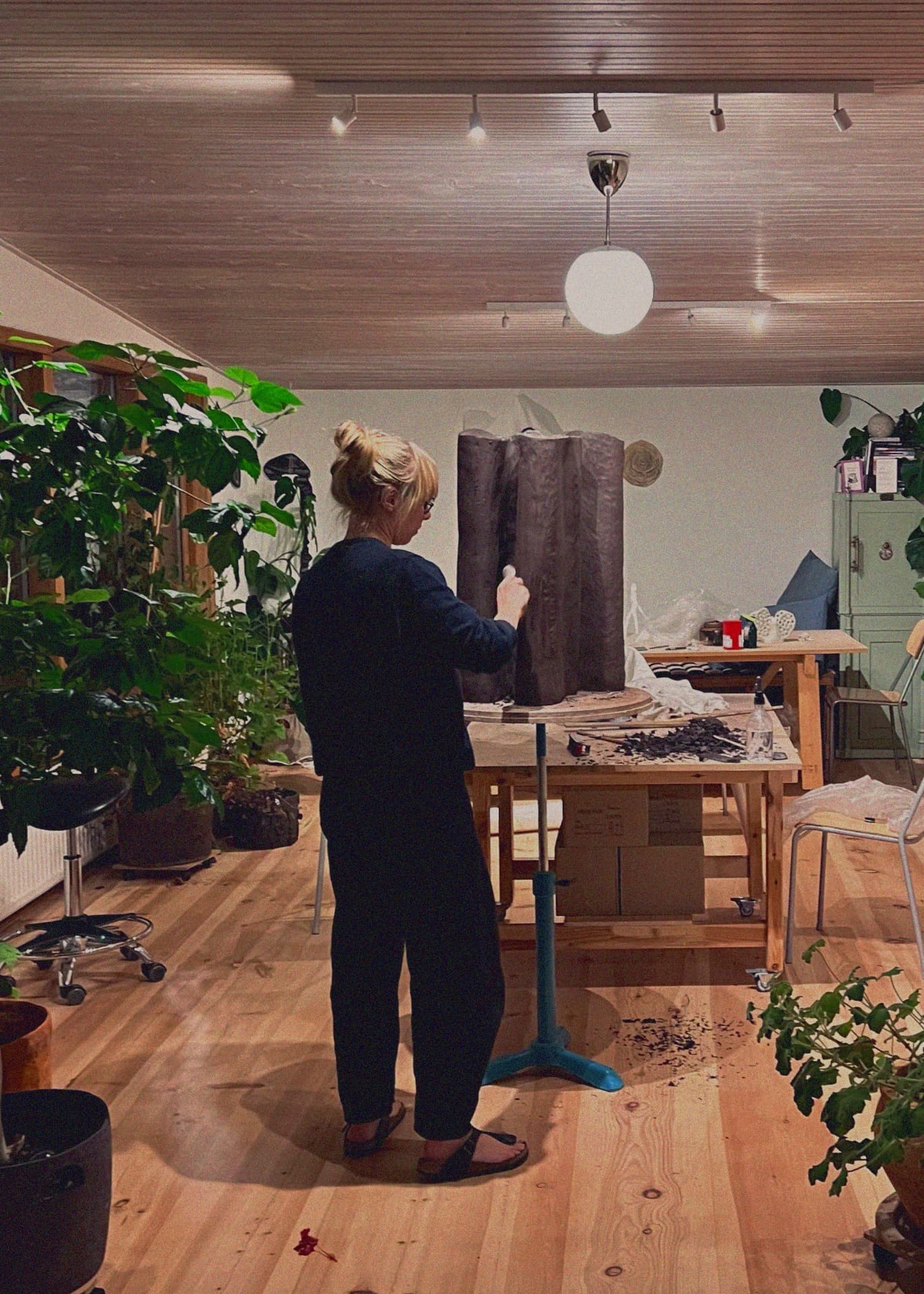
Malin never turned to ceramics, she turned to the clay. “It was the immediate feeling that I could do pretty much anything. The feeling that everything is possible.” It was love at first touch. Then she started studying ceramics, and the feeling disappeared. There were so many rules. “I had a bit of a hard time with all the lecturing. It wasn’t fun anymore. I still call myself an involuntary ceramicist because of that. I’ve never felt like a ceramicist but it's a role that slowly grew with me, I’m a person who likes working with clay.” But you learned to handle clay like a ceramicist? “In an almost involuntary way.”
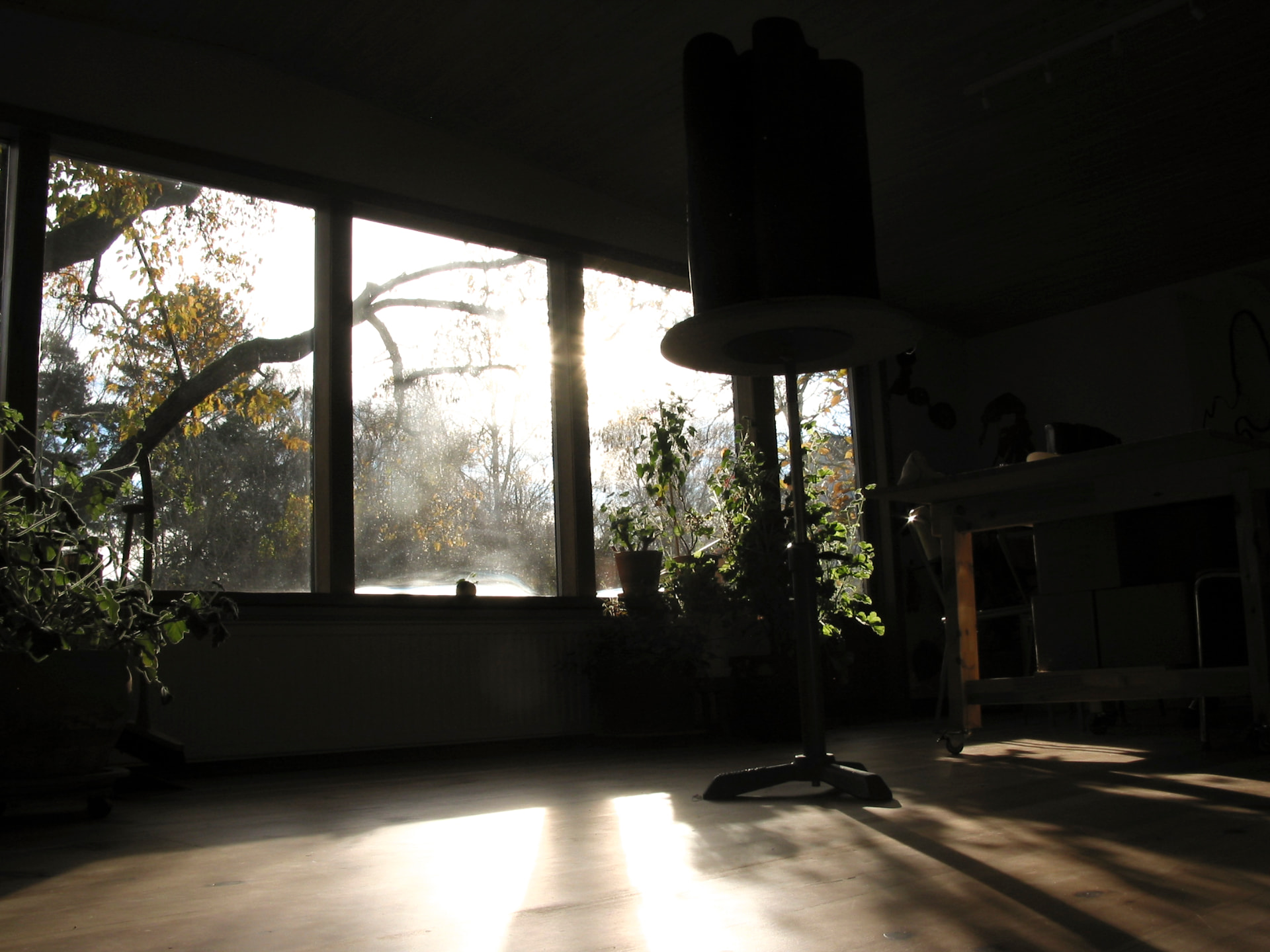
Despite this, she has only thought about quitting once. “I thought, this isn’t my thing. It almost felt like I had no choice, because I ended up there anyway.” What pulled you back in? “Maybe the eagerness and the curiosity in things that don't come easily. I think I need resistance to find things interesting. Besides that, I just wanted to build things in clay. I got a kind of knowledge in my hands and I could express myself through it.” What she needed was an empty studio. “There I could make up my own set of rules. And once I did, I noticed that most things work, even if they tell you they won’t.”
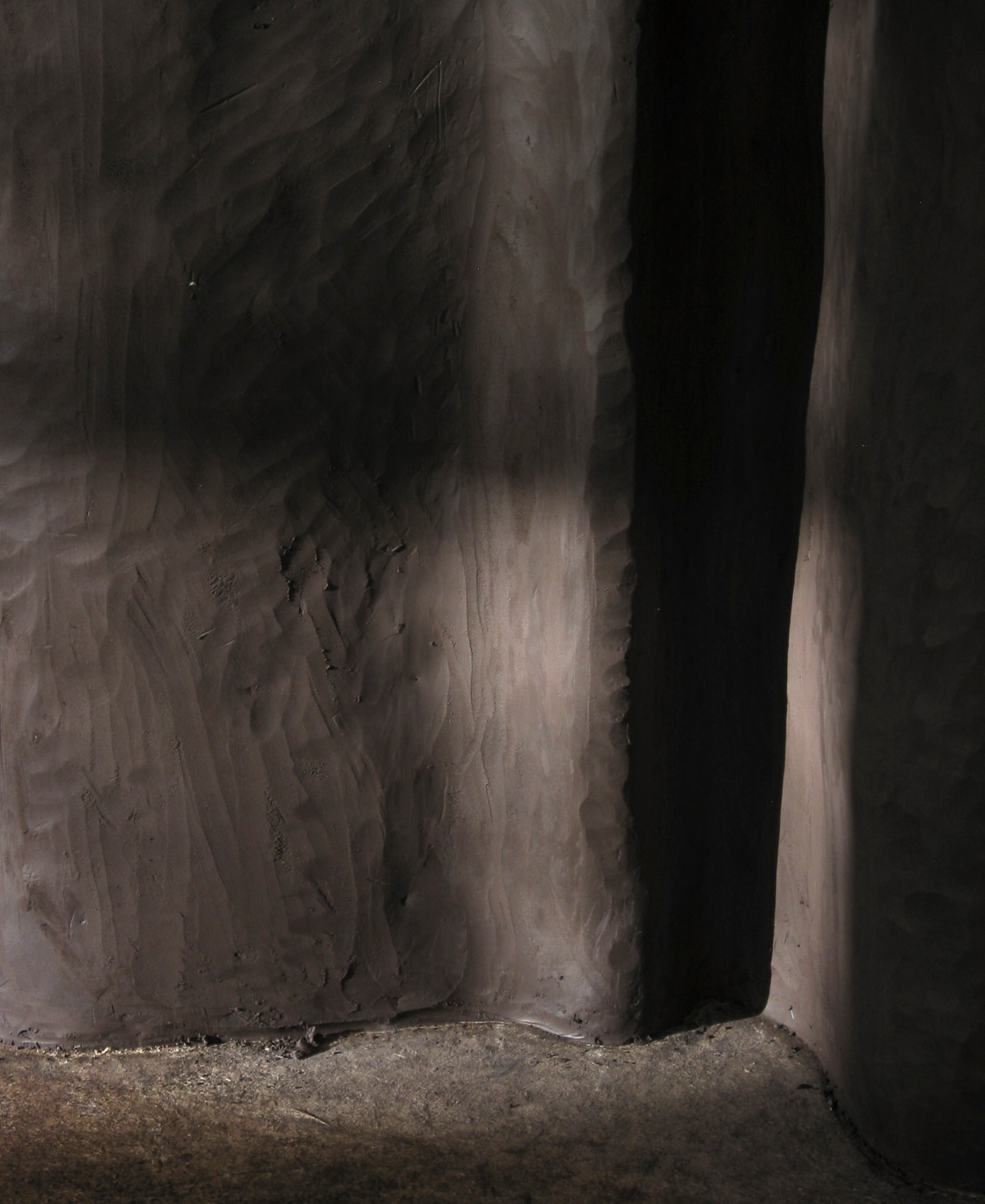
“Working with clay is like becoming humble in the face of circumstances. Resistance is part of the process.”
Why do you keep going? She thinks for a while. “I simply love this material and most of the time it doesn't feel like I have a choice. It wasn’t only me choosing clay, clay also chose me. Working with clay is like becoming humble in the face of circumstances. Resistance is part of the process.” You’ve tried wood, concrete and words. Why clay? “It’s tactile. I can work with just my hands and do what’s in the moment.” Clay can be extremely fragile if you don’t fire it, and once you have, it can last forever. That contrast has become her whole practice. She has worked with the same project since 2020. “Recently I’ve found a new way into it. I can kind of change dimension. So it feels endless.”
For her, clay is alive. “Others may say it’s a completely dead material. But I see it as having its own wishes, which is what lets me have a dialogue with it. It’s like all relationships. I can’t force others to do things they don’t want to.” When it breaks: “If it matters so much that it turns out a certain way, you do yourself a disservice. This material is really teaching me to handle disappointments, and it can transfer to other things in life as well.”
How does it feel in your hands? “Cold, but malleable. Pliable, but with a direction or intention of its own. I can’t force the material too much, it requires knowledge and presence.” And is it gooey? “No. I work with zero percent gooey.”
Clay mirrors her. “It’s playful and hard at the same time. I can’t behave however I want. There’s a clear limit where the material says: no more. You’ve built too much, sit down.” Once, while building large sculptures pregnant and nauseous, every single one broke. “I have the knowledge, but I was thinking about other things, so I wasn’t present. And the material didn’t accept that.”
What does clay demand? “My presence and my commitment. Maybe all it demands is that I feel into it and listen.” She laughs at the word. “Listening is vague, because it isn’t speaking.” And the most satisfying thing? “That it doesn’t always do what I want. Maybe that’s exactly what’s lovely and what I need. And then it’s just nice to spend time with.”
If clay were a person, who would it be? “Not someone who takes up the room. A pretty laid-back, secure person who turns out to be so much fun once you put in the time.” Not the main character, but a steady life partner, a collaborator she can’t really live without. “Maybe clay is many different characters. But then, so am I.”
Three words for someone who has never touched clay: “Changeable. Intense. And maybe steady. But it could be three other words in a week. Who knows?”